The Challenge: A Clinic With a View — and a Problem
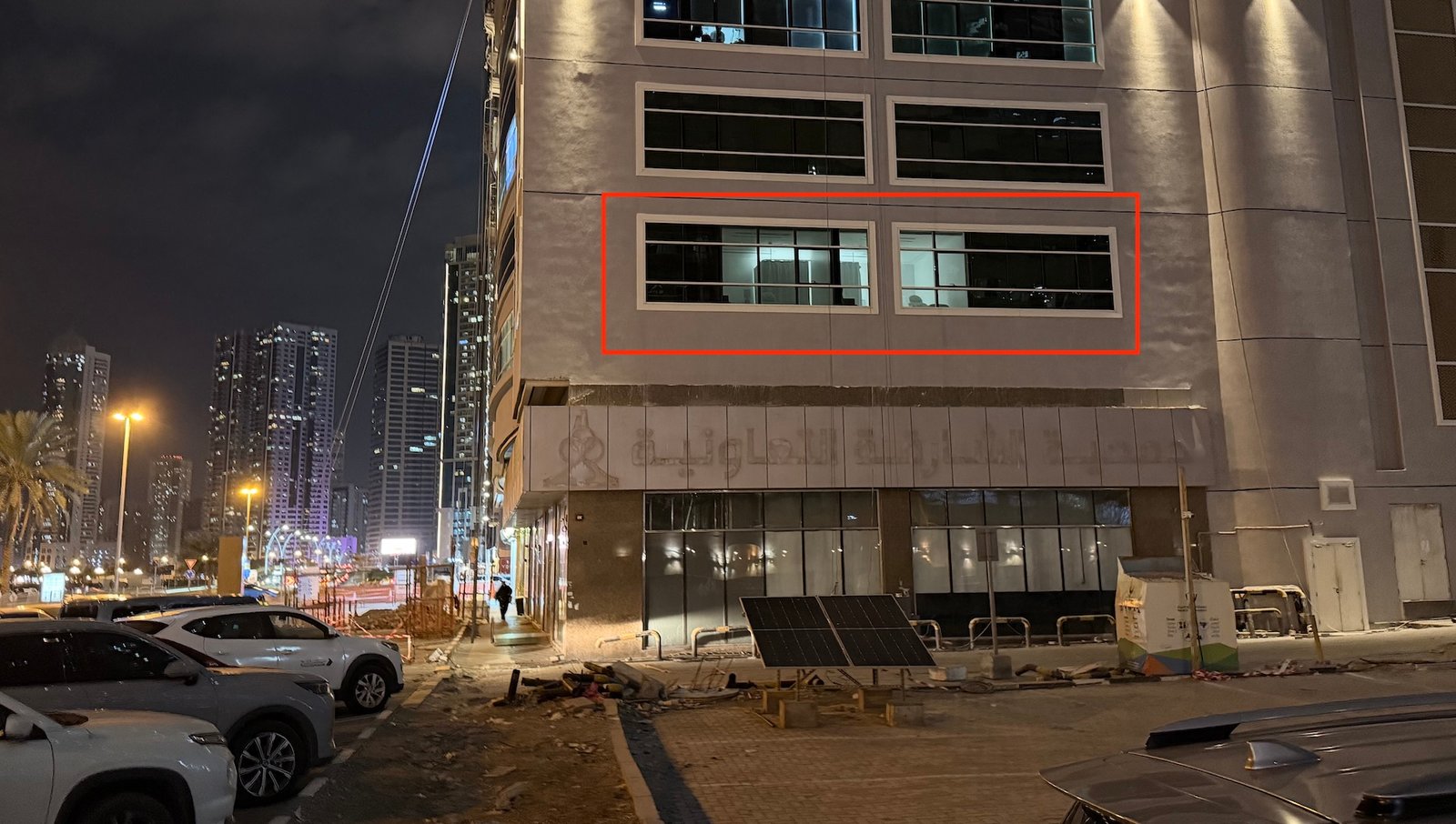
Baraa Al Hafez Clinic occupies the first floor of Asas Tower, with a full-height glass facade overlooking the sea. It’s a striking location — but it created a real problem for the clinic’s visibility and branding.
The building’s strata regulations prohibit any external signage or installation on the glass facade. No vinyl branding, no external LED, no mounted signage of any kind. The clinic effectively had no way to identify itself to anyone outside the building.
The obvious fallback — an indoor LED screen mounted facing outward — created a worse problem than the one it solved. A standard indoor screen large enough to be visible from the road would:
- Block the clinic’s sea view from inside
- Turn the glass facade solid black during the day when the screen is off
- Cut off natural light from entering the clinic interior
For a healthcare environment built around a bright, open, glass-fronted design, that trade-off wasn’t acceptable.
The Solution: Holographic Mesh LED
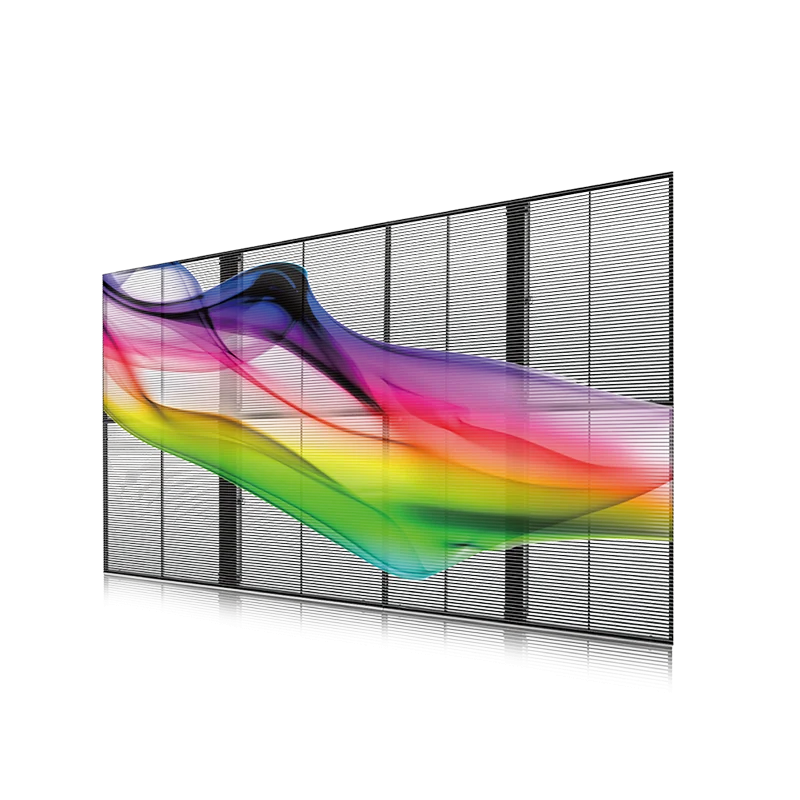
UP2 proposed a transparent holographic mesh LED screen — a technology built specifically for glass facade installations where visibility, branding, and transparency all need to coexist.
Unlike a standard indoor LED panel, holographic mesh LED is constructed from a sparse grid of LED strips embedded in a fine mesh substrate, rather than a solid panel. This structure is what allows light — and the view — to pass through the screen when content isn’t actively demanding attention.
| Specification | Detail |
|---|---|
| Technology | Holographic Mesh LED |
| Pixel Pitch | P6.25 |
| Brightness | 5,000 nits — clearly visible in direct daylight |
| Transparency Rate | 85% |
| Installation | Indoor, facing outward through glass facade |
| Environment | Healthcare — Clinic |
| Client | Baraa Al Hafez Clinic, Asas Tower |
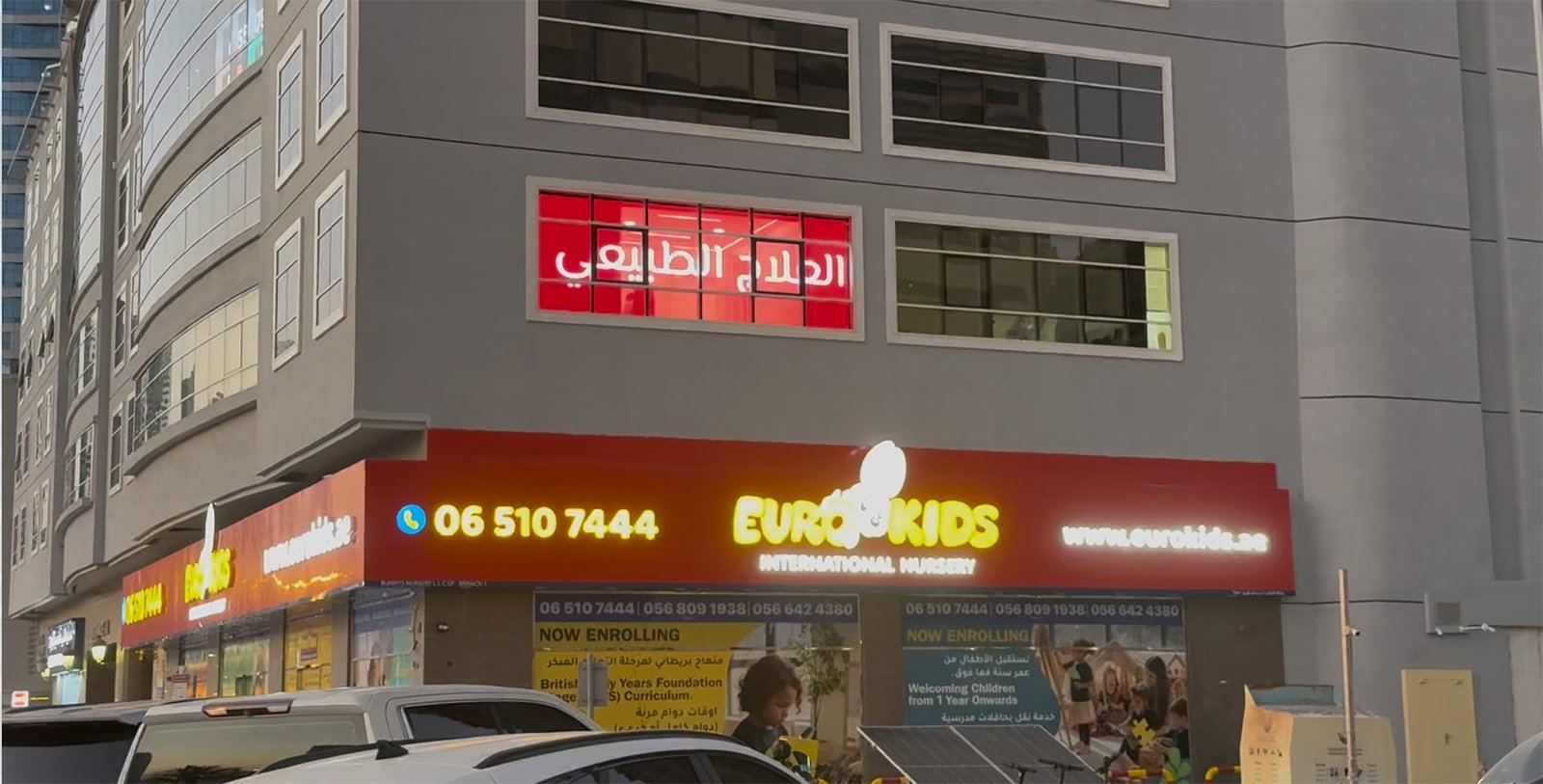
At 5,000 nits, the screen stays fully legible from the street even under direct Dubai sunlight — a critical requirement for any display facing outward through glass, where reflected daylight would wash out a lower-brightness screen.
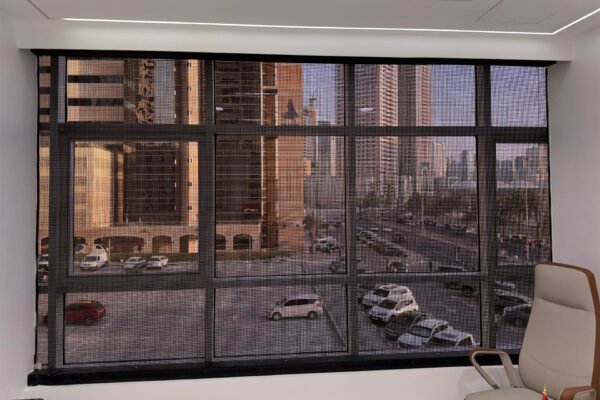
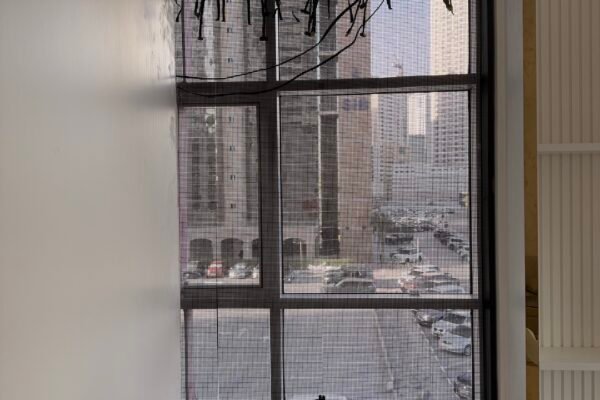
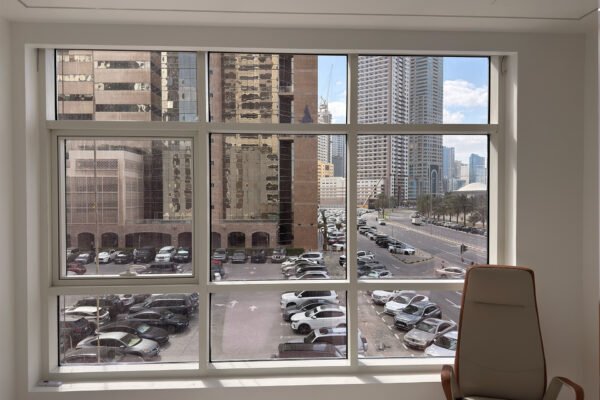
Through the Glass: Before & After
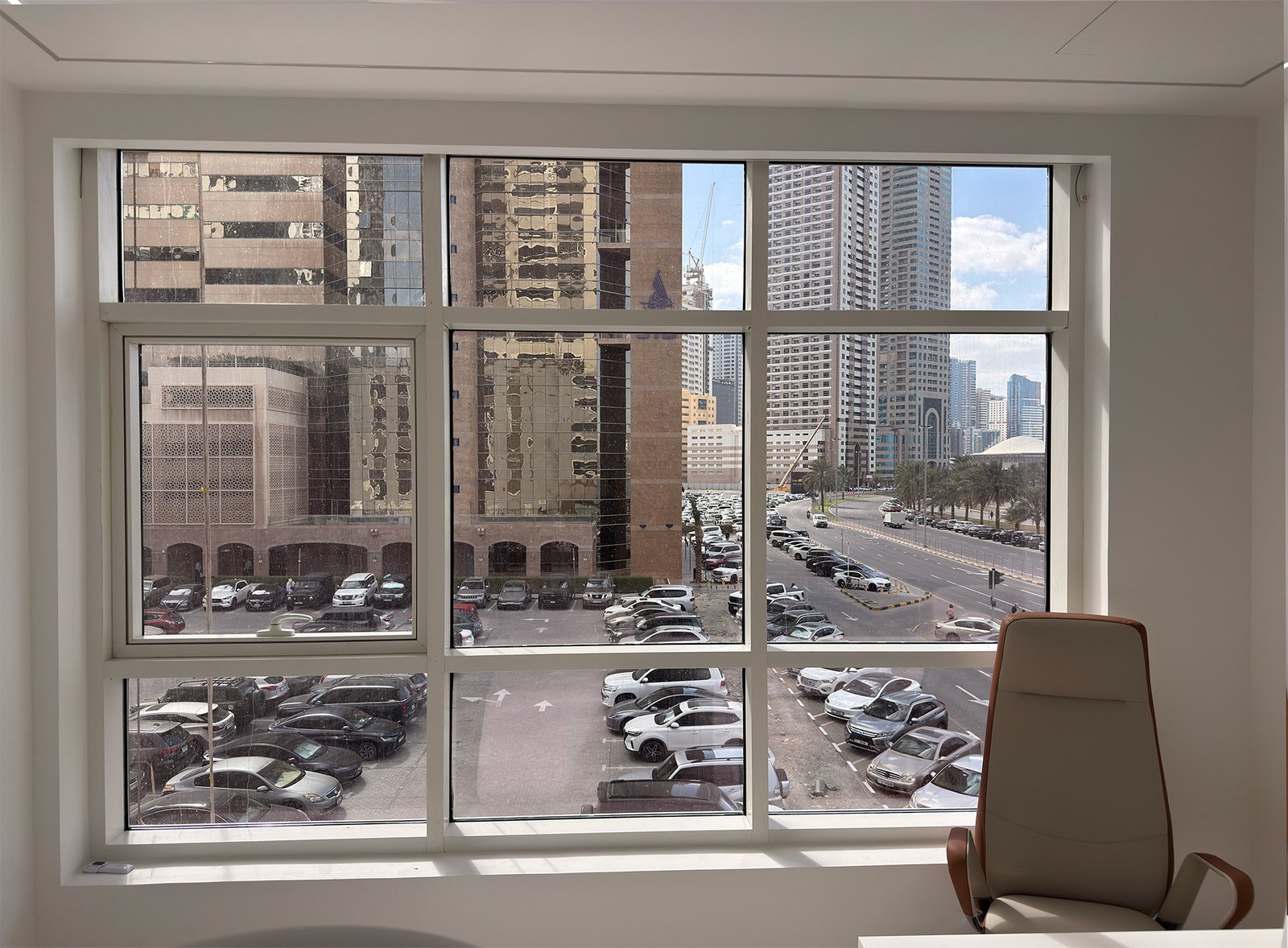
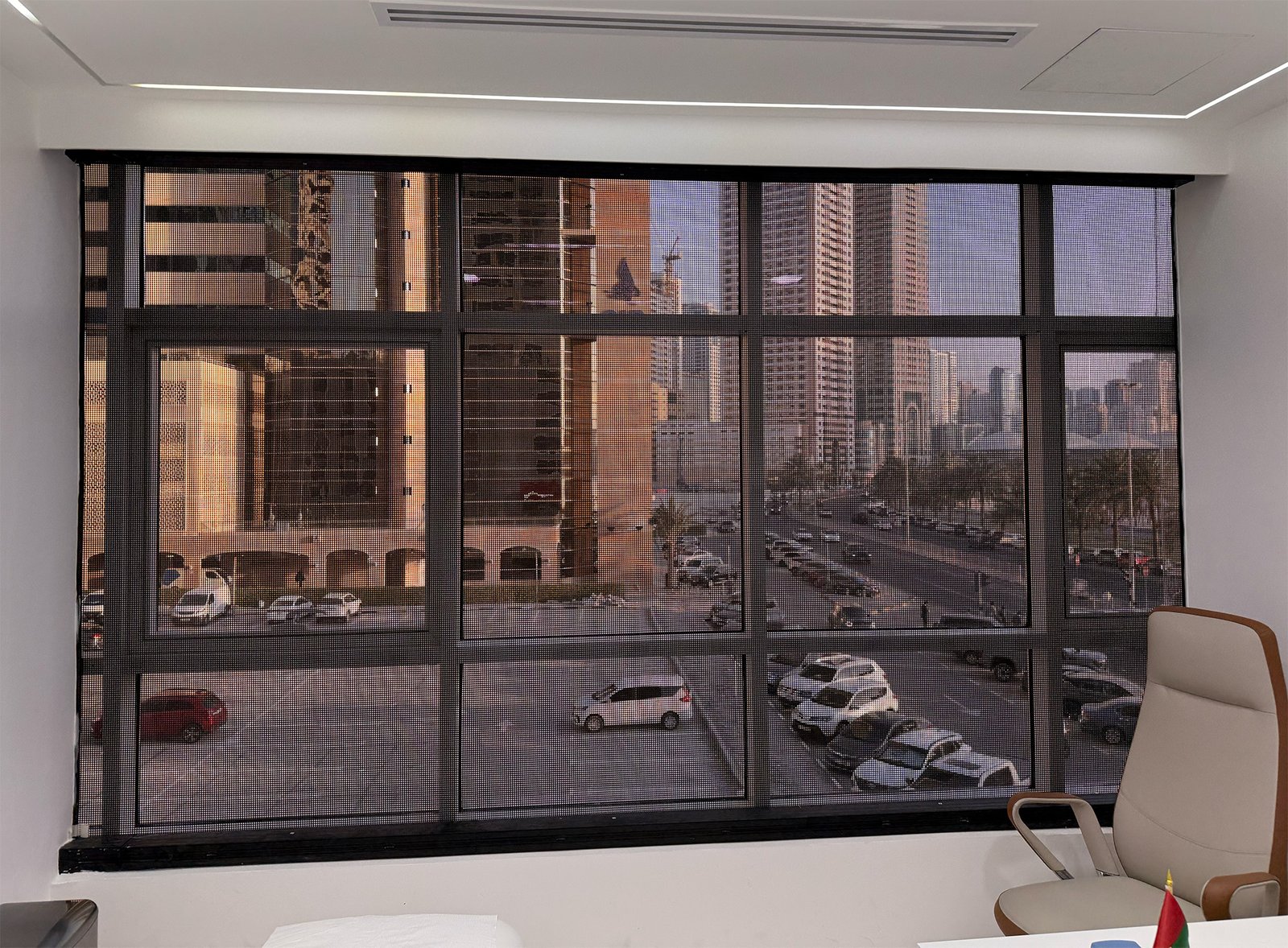
Why 85% Transparency Was the Right Target
Transparency in mesh LED screens is a direct trade-off against pixel density and brightness — the more open space between LED strips, the higher the transparency, but the lower the physical pixel count per square metre.
For this project, 85% transparency was the right balance:
- From inside the clinic, the sea view remains almost entirely intact. Patients and staff still see daylight and the horizon, not a wall of black plastic.
- From the road, the holographic effect produces a bright, eye-catching floating image — branding, clinic hours, promotional content — clearly visible even in daylight thanks to the 5,000-nit output.
- When the screen is off, the facade reads as ordinary glass. There is no large black panel changing the building’s appearance during off-hours.
The Result
The installation solved every constraint at once:
- Compliant with the building’s no-external-installation rule — the entire screen sits behind the glass, on the inside
- Visible from outside the building, giving Baraa Al Hafez Clinic the street-level brand presence it previously had no way to achieve
- Transparent enough that the clinic keeps its sea view and natural light, both when the screen is on and off
This is the kind of constraint that comes up often in Dubai’s high-rise commercial buildings — strata rules that block conventional signage, paired with glass facades that owners don’t want to lose. Holographic and transparent LED is, in many of these cases, the only category of display that can solve the problem at all.
Is Transparent LED Right for Your Building?
Transparent and holographic LED works best when:
- External signage is restricted by building regulations, strata rules, or heritage facade requirements
- The space behind the glass needs to retain natural light or a view
- The display needs to be visible from outside without altering the building’s appearance when switched off
Pixel pitch, brightness, and transparency percentage should be selected based on viewing distance from the road, daylight exposure, and how much of the view needs to be preserved — higher transparency suits views that must stay largely intact, while higher brightness ensures the content stays visible even in full sun.
Contact UP2 to discuss whether transparent or holographic LED is the right fit for your building’s facade.
Related Products
Related Products
Related Products
Related Products
Related Products
Home Cinema
All-in-One LED Display
SMART LED POSTER
Holographic LED Screen
Flexible LED