Introduction
Transparent LED technology is changing the way businesses and architects think about displays. Instead of heavy, solid walls, these solutions allow digital content to appear on glass, windows, and building facades while keeping light and visibility intact.
 But not all transparent LEDs are the same. Today, there are four main types of transparent LED displays:
- Mesh LED
- Flexible LED Foil (Film LED)
- Hologram LED Film
- LED Embedded in Double Glass
Let’s break down each type, their benefits, and where they are used.
1. Mesh LED
What it is
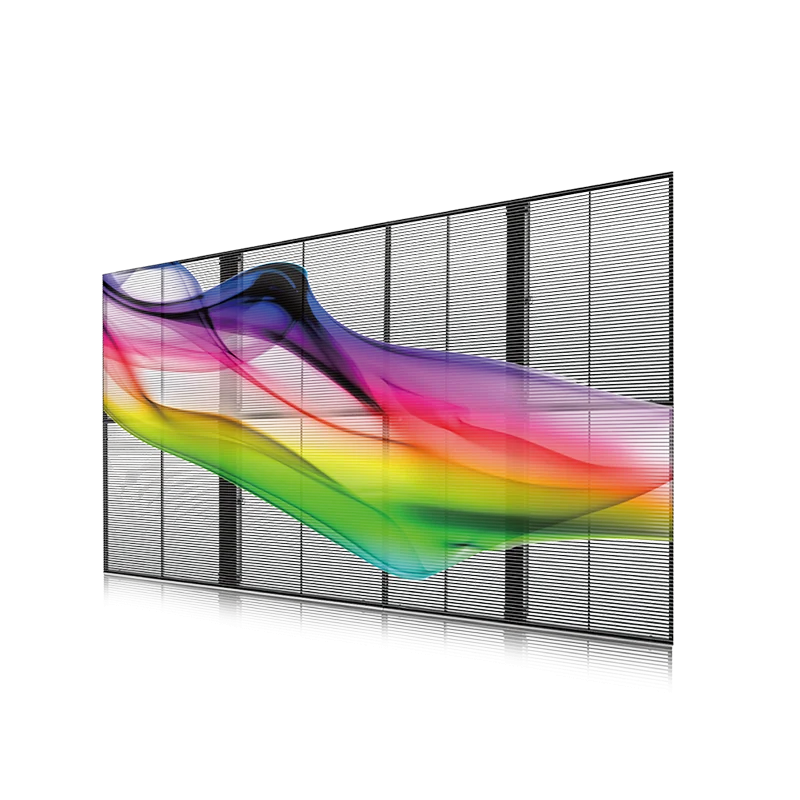
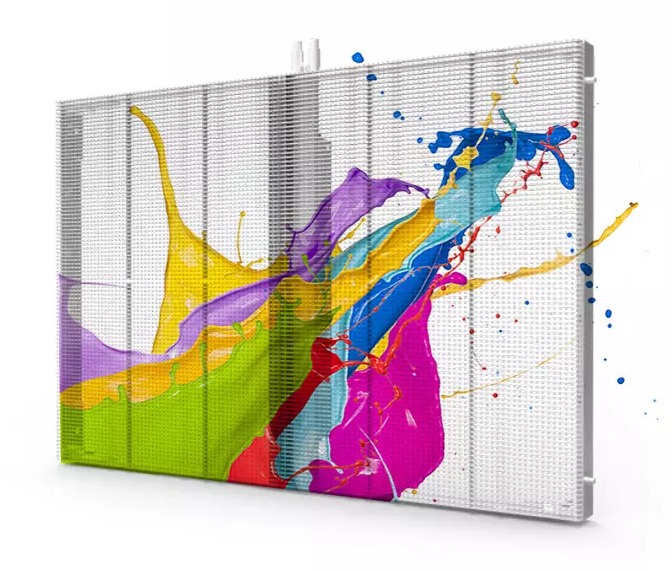
Mesh LED is made of thin LED strips with visible gaps between them. Installers typically mount it on building facades, large glass surfaces, and structural frameworks, letting air, light, and visibility pass through.
Advantages
- High brightness — visible even in direct sunlight
- Strong and weatherproof for permanent outdoor use
- Lightweight compared to traditional solid LED walls
- Transparency up to 70–80% depending on pixel pitch
- Large format possible — suitable for entire building facades
Where it’s used
- Skyscrapers and building facades
- Stadiums and outdoor event venues
- Large-scale architectural media displays
- Retail mall exteriors and entertainment destinations
Best for
Projects that require large outdoor coverage without blocking wind load or natural light — such as high-rise building media facades or stadium perimeters.
2. Flexible LED Foil (Film LED)
What it is
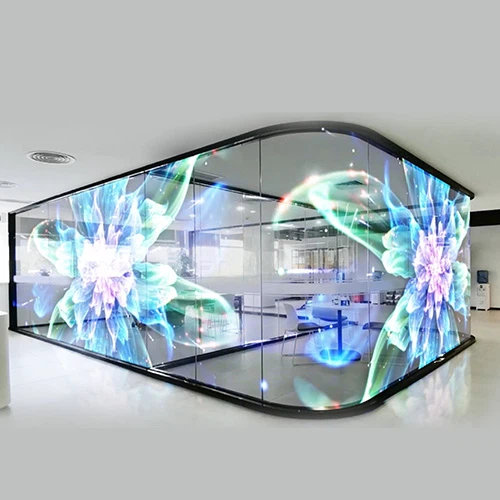
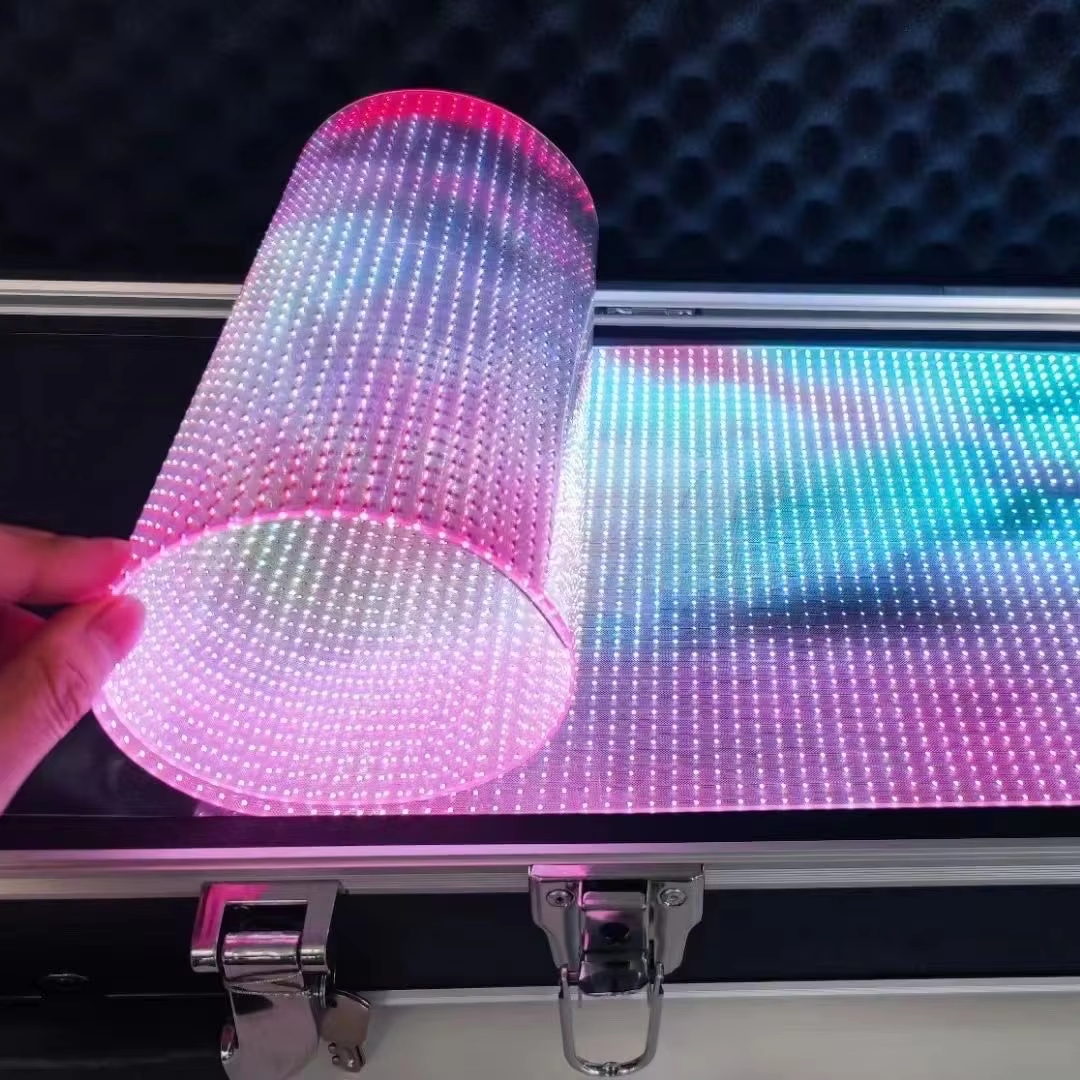
Flexible LED Foil — also called Film LED or Transparent Film LED — is an ultra-thin, flexible screen that adheres directly to existing glass surfaces. It’s transparent, lightweight, and cuts to custom shapes and sizes.
Advantages
- Adheres directly to existing glass — no structural changes needed
- Very light and easy to install or remove
- High transparency: 70–90% depending on pixel density
- Can wrap around curved glass and creative architectural shapes
- Minimal installation disruption — no drilling or frame required
Where it’s used
- Retail shop windows and showroom glass
- Car showrooms and luxury brand boutiques
- Creative installations in museums and exhibitions
- Glass elevators and curved architectural surfaces
Best for
Retail environments where the display needs to be added to existing glass without construction — delivering dynamic content while keeping the storefront visible from inside and outside.
3. Hologram LED Film
What it is
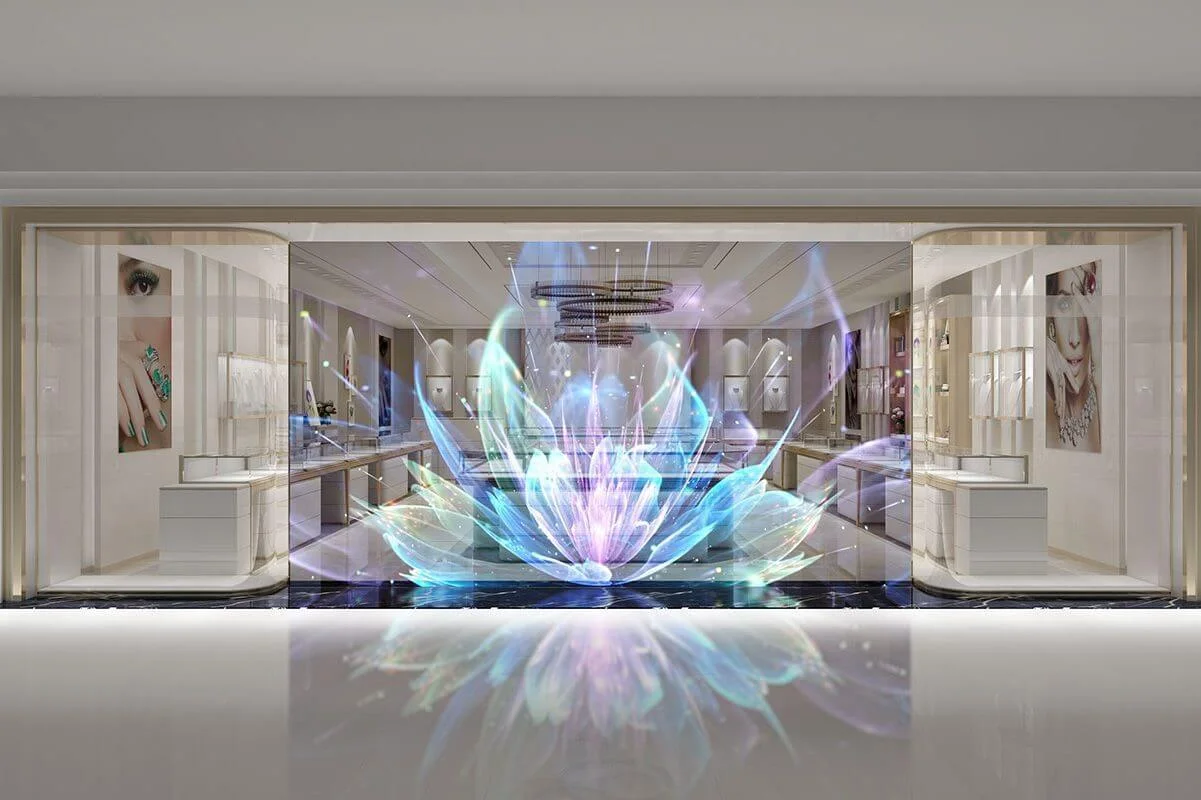
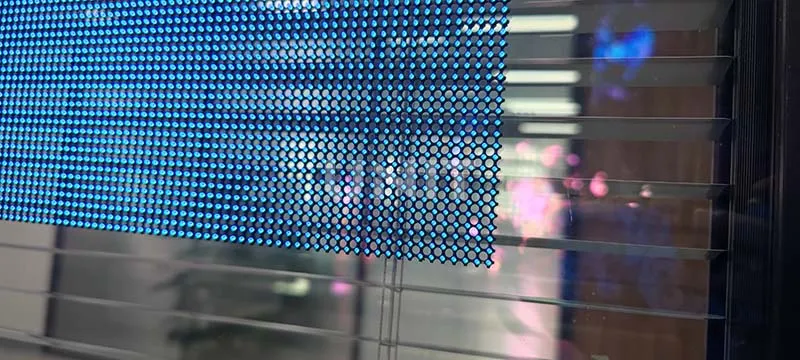
Hologram LED Film uses a special projection-based transparent screen or an array of spinning LED blades to create a floating 3D visual effect. Unlike mesh or foil LED, the “hologram” effect relies on a visual illusion. Content appears to float in mid-air, and the viewer never sees a physical surface.
Advantages
- Creates a striking floating 3D visual effect — no glasses needed
- Extremely high attention-grabbing power in retail and events
- Compact and easy to deploy for product showcases
- Works well in dim or controlled-light environments
- Available in single units or tiled arrays for larger displays
Where it’s used
- Retail product showcases and luxury brand activations
- Exhibitions, trade shows, and pop-up events
- Hotel lobbies and hospitality spaces
- Museum displays and interactive installations
Best for
High-impact product display and brand activations where the “wow factor” is the primary goal — particularly effective in dark or semi-dark environments where the floating effect is most visible. For a real-world facade application, see how UP2 installed an 85% transparent holographic mesh screen at Baraa Al Hafez Clinic in Asas Tower to solve a no-external-signage restriction.
4. LED Embedded in Double Glass
What it is
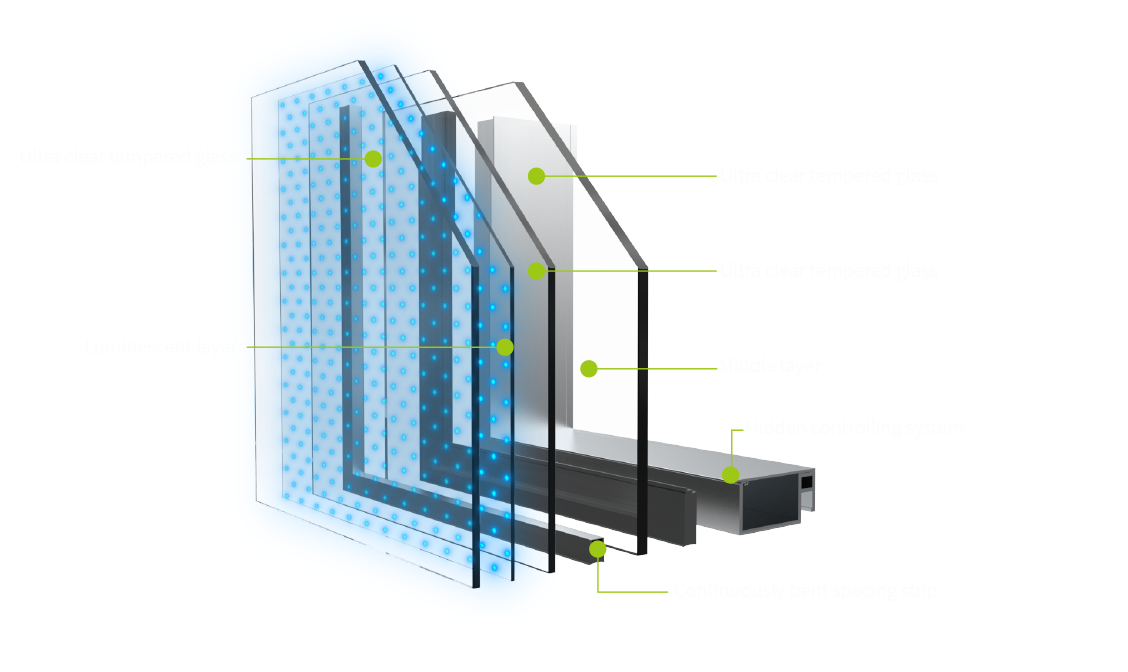
In this solution, manufacturers build LED modules directly inside laminated double-glass panels during production. The LED becomes a structural part of the glass itself — delivering display capability within an architectural glass element.
Advantages
- Strongest and most durable transparent LED option
- Perfect transparency with no visible frame or extra structure
- Fully weatherproof, UV-resistant, and safe for public spaces
- Long lifespan — designed for permanent architectural installation
- Can meet building safety and fire regulations (laminated glass)
Where it’s used
- Airports and transportation hubs
- Modern skyscrapers and premium office towers
- Luxury retail flagship stores
- High-end architectural projects requiring glass facades with media
Best for
Permanent architectural installations where the display must integrate seamlessly into the building structure — airports, corporate headquarters, and landmark buildings where durability and aesthetics are equally critical.
Which Type Is Right for Your Project?
| Type | Best Use Case | Transparency | Durability |
|---|---|---|---|
| Mesh LED | Large outdoor facades | 70–80% | Very High |
| Flexible Film LED | Retail windows, glass surfaces | 70–90% | Medium |
| Hologram LED Film | Product showcase, events | Near 100% | Medium |
| Double Glass LED | Permanent architectural builds | 60–75% | Highest |
Need Help Choosing?
UP2 supplies all four types of transparent LED displays in Dubai and across the UAE. For current transparent LED pricing per square metre, see our LED screen price guide. Whether you’re fitting out a retail window, designing a building facade, or planning a brand activation, we can help you select the right solution, handle installation, and provide full after-sales support.
Contact UP2 for a free consultation and site survey.
Related Products
Related Products
Related Products
Related Products
Related Products
Holographic LED Screen