Introduction
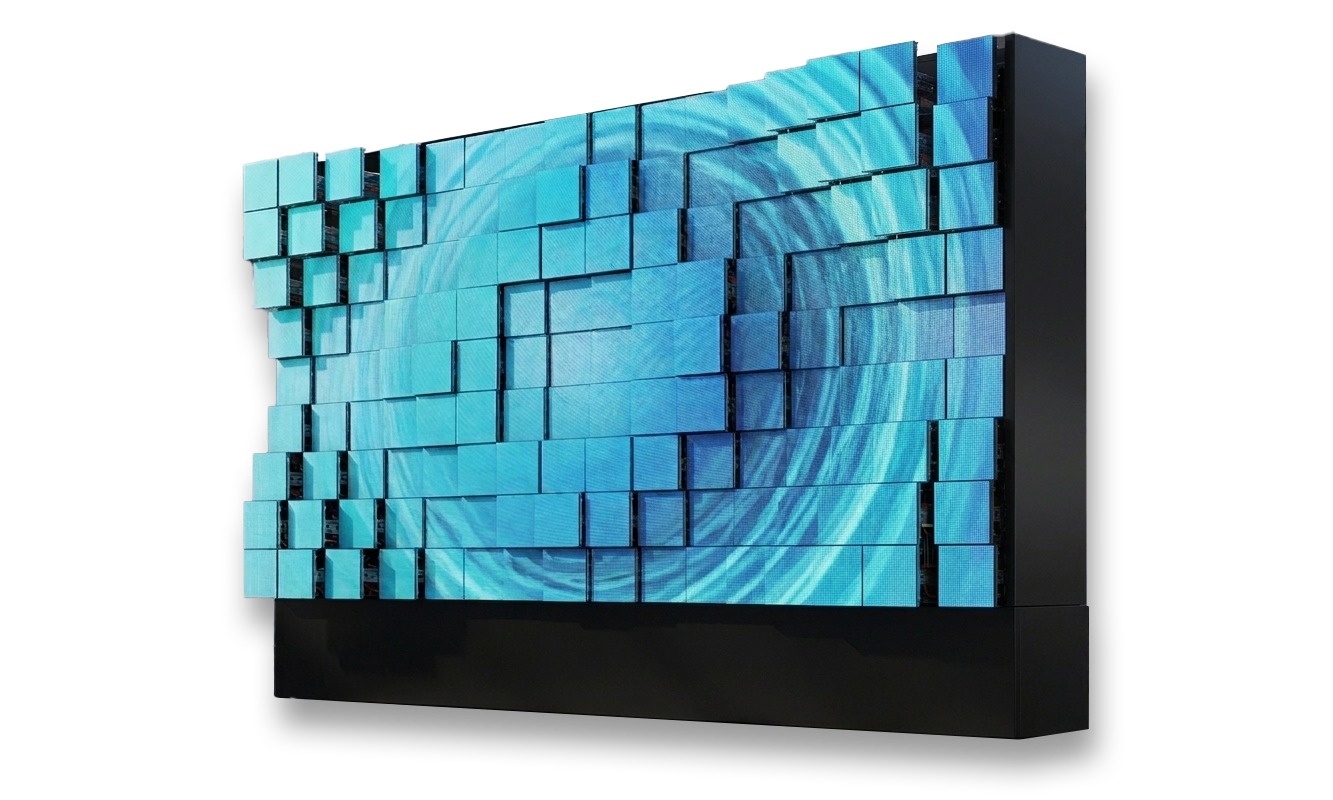
Most LED screens are designed to disappear into the wall — flat, static, purely a picture. Kinetic LED does the opposite: the screen itself moves. Individual modules extend and retract in sync with video content, turning a flat display into a sculptural surface that physically changes shape as it plays. For exhibits, product launches, and brand activations in Dubai, that’s a genuinely different category of display, not just a bigger or brighter version of a standard screen.
How Kinetic LED Actually Works
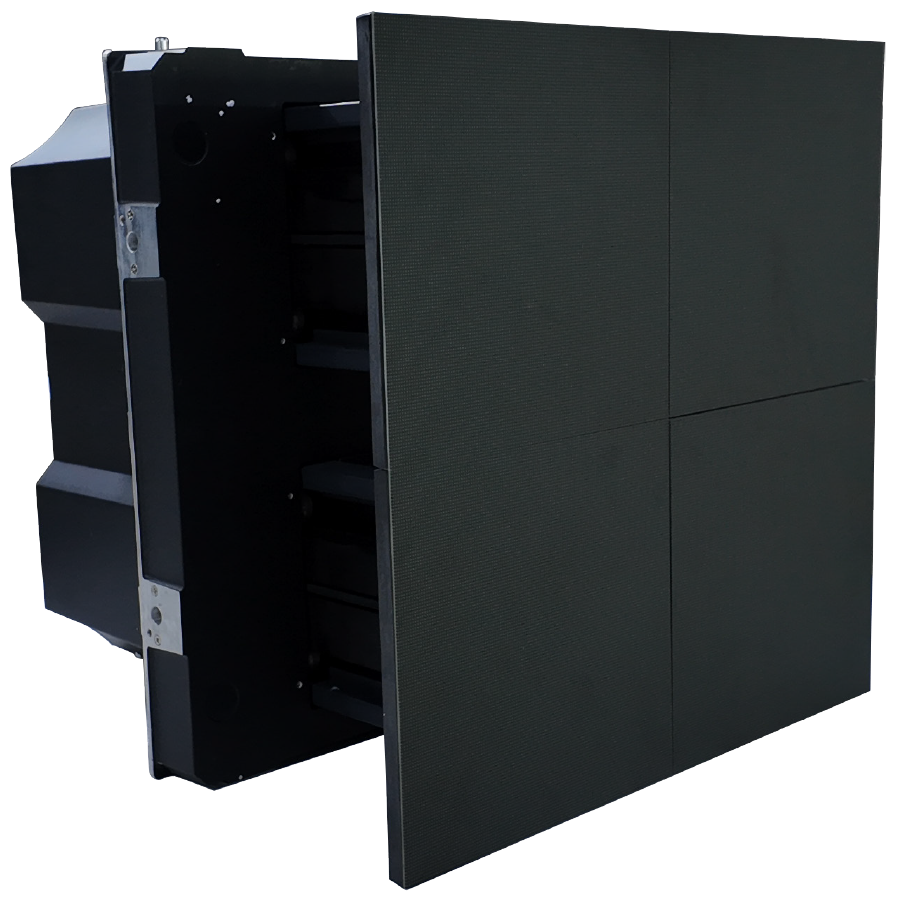
A kinetic LED wall is built from a telescopic matrix — dozens or hundreds of independent LED modules, each mounted on its own motorized rail. Motion scripts, synced frame-for-frame to video content, drive each module in and out on command. The result is a display that can ripple, wave, or form three-dimensional shapes in time with whatever’s playing on screen, then flatten back into a conventional LED wall when the effect ends.
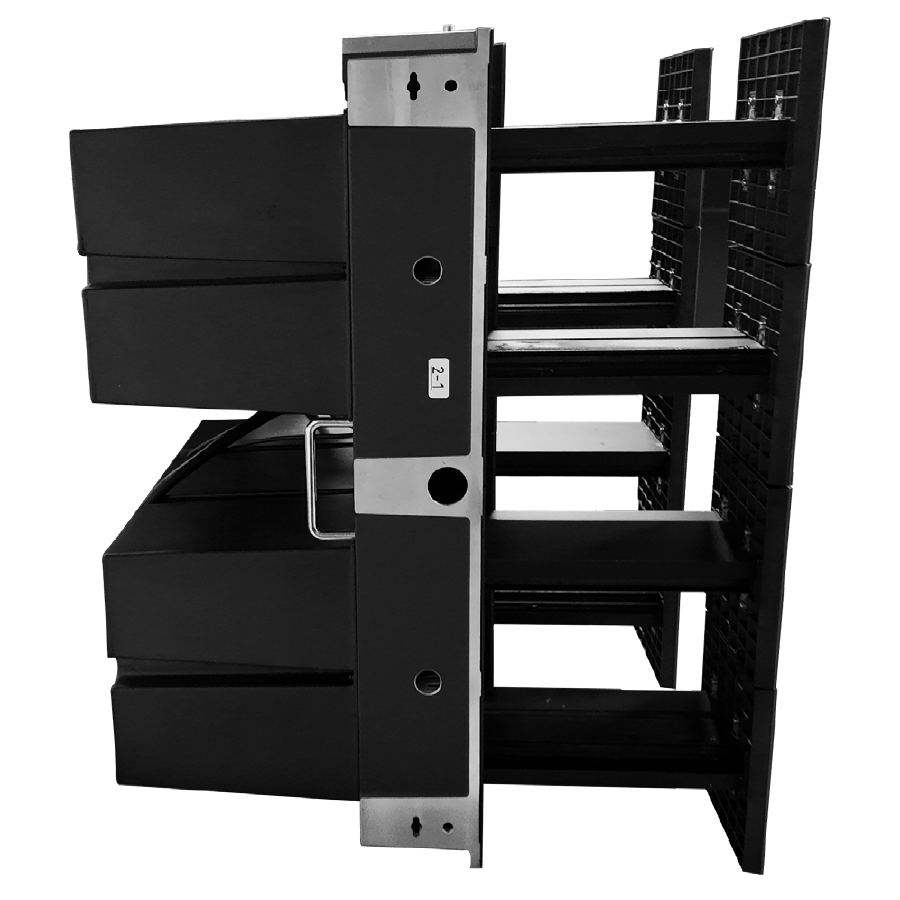
This isn’t a gimmick layered on top of a normal screen — the LED panel itself is the moving part. Each module sits on precision linear guides, driven by a closed-loop stepping motor rather than a simple actuator, which is what allows dozens of modules to move in tight, repeatable sync instead of drifting out of alignment after repeated cycles.
UP2’s kinetic LED system uses individual modules with a maximum telescopic stroke of 200mm, extending at up to 300mm/s for genuinely dramatic, camera-ready motion.
Technical Capabilities
| Capability | Specification |
|---|---|
| Pixel pitch | P1.98 (160×160mm modules) or P1.95 (250×250mm modules) |
| Telescopic stroke | Up to 200mm, at speeds up to 300mm/s |
| Module gap | As little as 1mm, held by industrial-grade linear guides |
| Noise reduction | Closed-loop stepping drive cuts operating noise ~70% vs open-loop designs |
| Control | Bus protocol network control, motion scripts bound to specific video content, external UDP calling for central control |
| Maintenance access | Front-accessible, ultra-thin modules — no embedded rear access required |
The control system supports multiple motion scripts tied to multiple films, called individually through a central UDP protocol. In practice, that means a venue can run a calm, mostly-static pattern during quiet hours and switch to a full sculptural sequence for a scheduled activation, without anyone reprogramming the hardware — the system simply calls a different script on cue.
Planning an Installation: What’s Different From a Static Wall
A kinetic wall isn’t a straightforward swap for a standard LED panel of the same size, and the planning process reflects that.
Structural load. Motorized modules are heavier per square meter than fixed panels, and the mounting structure has to account for repeated mechanical motion, not just static weight. A site survey needs to confirm the wall or frame can support both the load and the vibration from continuous operation.
Power supply. Motor draw pushes power requirements higher than an equivalent static screen — installations under 3KW run on standard 220V single-phase, but anything larger needs a 380V three-phase, five-wire supply. This needs to be confirmed at the electrical planning stage, well before installation day.
Clearance behind the wall. Because modules physically extend, the installation needs real depth behind the display — typically at least the maximum stroke length plus mounting hardware. This is the single most common reason a kinetic wall doesn’t fit a space that would otherwise work for a static screen.
Content preparation. Motion scripts have to be built to match specific video content frame-by-frame, which means content and hardware need to be planned together from the start, not treated as separate steps.
Frequently Asked Questions
Does the moving mechanism wear out or need frequent maintenance?
The closed-loop stepping drive is built for continuous cycling, and the front-accessible module design means individual units can be serviced without dismantling the surrounding wall. Maintenance frequency depends on usage — a display running constant motion cycles in a busy airport will need more attention than one used for occasional scheduled activations.
Is it safe to install in a space with public foot traffic?
Yes, when the installation is planned correctly — the moving components stay within the module housing and extend toward the viewer’s side of the wall, not into an open walkway. Structural mounting and clearance planning during the site survey are what make this safe, which is why we treat that step as non-negotiable rather than optional.
Can existing video content be used, or does it need to be made specifically for the kinetic effect?
Standard video content plays on the screen normally when the modules aren’t moving. To trigger the motion effect, a separate motion script needs to be built and synced to that content — this is a real production step, not automatic.
How loud is it during operation?
UP2’s system uses a closed-loop stepping drive specifically because it cuts operating noise by roughly 70% compared to open-loop telescopic designs — quiet enough for corporate lobbies and retail environments, though still worth hearing in person before committing to a space with strict noise requirements.
Where Kinetic LED Actually Makes Sense
Kinetic LED isn’t a replacement for a standard video wall — it’s a specific tool for a specific kind of moment. It shows up most often in corporate lobbies, exhibition halls, and brand activations, where the goal is a few seconds of genuine surprise rather than continuous content playback. Airports, science and technology museums, and flagship retail openings use it for the same reason: a screen that physically transforms draws attention in a way a flat display, however large or bright, generally can’t.
Supply and Installation
UP2 Digital Signage supplies and installs kinetic LED systems in Dubai, including full site assessment for power and structural requirements, motion script setup, and ongoing support. See the full Kinetic LED Retractable Screen specifications for both module sizes, or browse our full LED display range if a static or flexible screen is a better fit for your project.
Contact UP2 Digital Signage to discuss whether kinetic LED fits your venue and activation.